

 EN
EN  英语
英语 中文简体
中文简体 西班牙语
西班牙语 越南语
越南语 葡萄牙语
葡萄牙语 土耳其语
土耳其语Round knife cutting machine JM-90
Features The JM-60/70 miniature cutting machine is suitable for cutting curves, small arc...
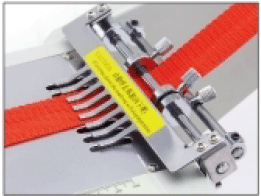
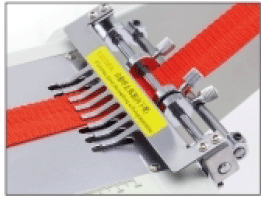
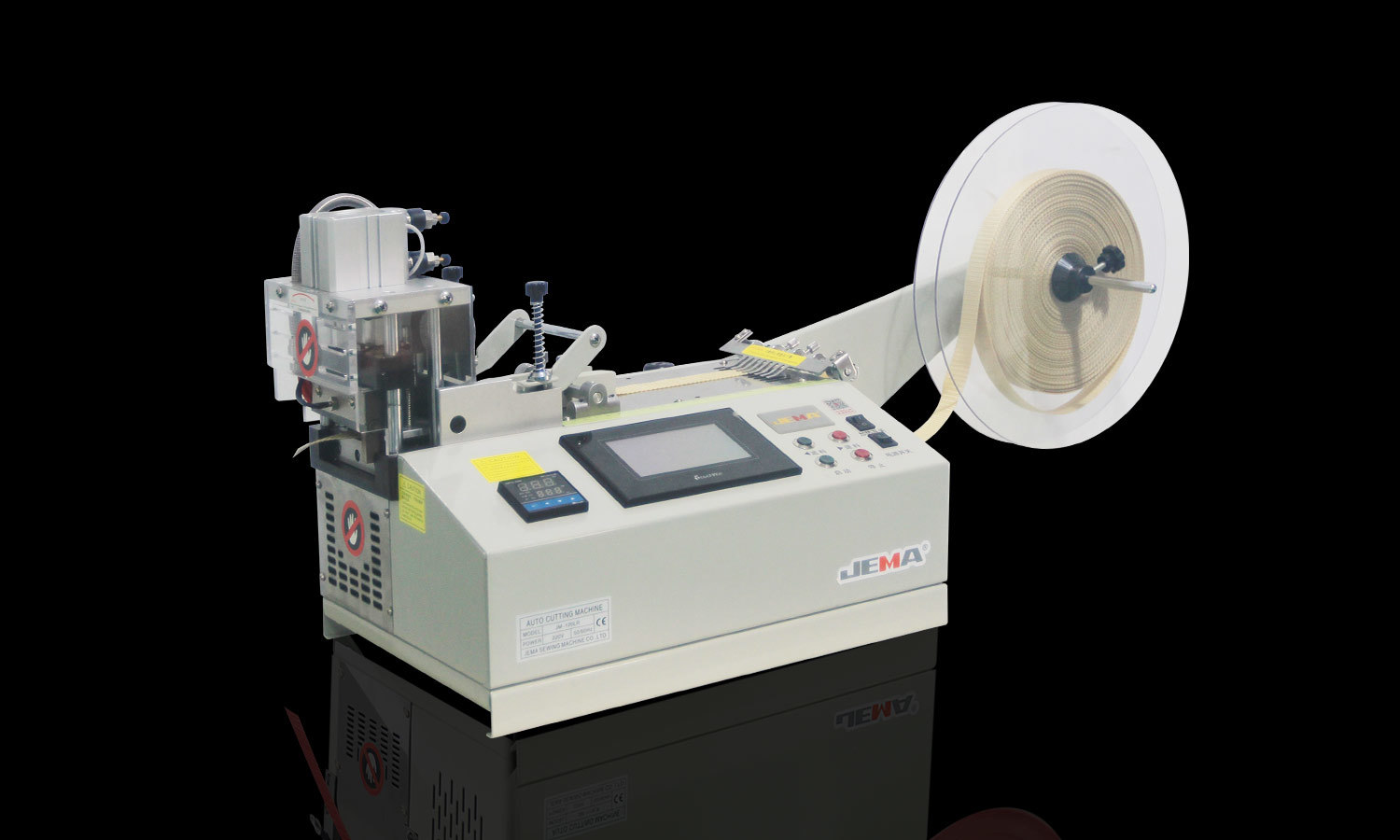
Nylon tape has a woven structure made from many fine strands running through the length and width of the material. Once a strip is cut across its width, part of that structure is interrupted. Loose strands may then appear along the new edge, especially when the tape is handled, pulled, folded, or sewn.
A clean‑looking cut is therefore not only about separating one section from another. Edge condition can also affect how the tape behaves during later processing. Loose fibers may catch on nearby surfaces, become tangled during sewing, or make the edge look uneven after repeated handling.
A simple blade can separate the tape mechanically, although cutting alone does not change the condition of the remaining fibers. For woven materials, the cut edge can still contain many exposed strands that are no longer held firmly by the surrounding structure.
Heat provides another way to deal with the cut edge. Nylon responds to controlled heating by becoming softer around the contact area. With suitable cutting conditions, fibers near the edge can join together as the material cools, creating a more stable boundary.
Such a process combines two actions in one operation. Material is separated into individual pieces while the newly created edge receives treatment at the same time. For manufacturers working with narrow woven tapes, combining both steps can make the cutting process easier to organize.
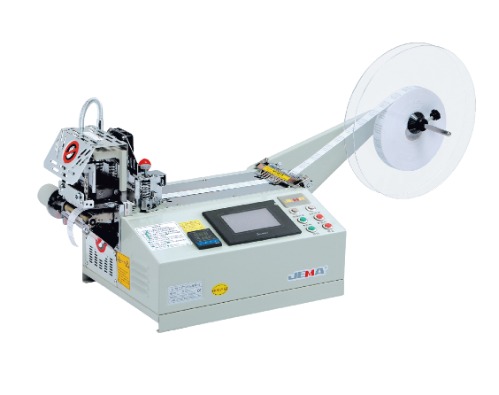
A Nylon Tape Cutting Machine normally brings the tape toward a heated cutting area, where separation and edge treatment take place together. Rather than using heat simply to warm the material, the cutting section applies heat at a controlled contact point.
As the heated blade reaches the tape, fibers close to the cutting line soften. Pressure from the cutting action helps separate the material while the softened edge remains close enough for the fibers to join together. After the blade moves away, the treated area cools and becomes more stable.
The process can be viewed through a simple sequence:
A suitable balance matters throughout the process. Too little heat may leave loose fibers around the cut. Excessive heating can change the appearance or feel of the edge and may affect the surrounding material.
Cutting pressure also has a role. The blade needs to separate the tape cleanly while maintaining a consistent contact area. When movement, heat, and cutting action work together, the resulting edge can remain more stable during later handling.
Nylon does not remain unchanged when exposed to heat. As temperature rises, its fibers become softer, allowing the material near the cutting area to respond differently from the cooler section farther away.
Controlled heating takes advantage of that change. Fibers close to the blade can soften enough to come together, while areas farther from the cut remain relatively unchanged. Once the heat source leaves the material, the treated edge cools and holds a new shape.
Heat needs to remain concentrated around the intended cutting area. When too much of the tape becomes soft, the edge may become harder, wider, or less even than required. A suitable setting therefore depends on the material being processed rather than following one fixed condition for every tape.
Tape thickness can change the way heat travels through the material. A thin woven strip may respond quickly, while a thicker structure can require a different heating condition. Weave density and surface treatment may also influence how the fibers react.
Material condition matters as well. Tape stored under different conditions can have different flexibility or surface feel. Such differences may affect the way the edge responds during cutting.
For practical production, the goal is not to apply as much heat as possible. The aim is to give the cutting area enough heat to handle the exposed fibers while keeping the surrounding tape in its intended condition.
A cutting machine performs several small actions around one cutting point. Feeding, positioning, heating, cutting, and collecting need to follow a coordinated sequence so that each section of tape reaches the blade in a stable condition.
The feeding section moves the long tape forward. Its movement needs to remain steady because changes in tape position can affect where the cut is made.
A positioning section helps keep the tape aligned. Woven tape is flexible and can move sideways during handling, so keeping it in a controlled path helps maintain a consistent cutting position.
The heated cutting part performs the main operation. It separates the material while treating the newly exposed edge. Its contact with the tape needs to remain consistent from one cutting cycle to another.
After cutting, a collection area receives the finished pieces. Keeping cut sections away from the active cutting area helps maintain an orderly workflow.
| Machine Area | Main Role | Relation To Edge Quality |
|---|---|---|
| Feeding section | Moves tape toward the cutting area | Supports steady material movement |
| Positioning section | Keeps tape in place | Helps maintain a consistent cut |
| Heated cutting section | Separates and treats the edge | Directly affects the cut boundary |
| Control section | Coordinates machine actions | Keeps each step in the intended sequence |
| Collection area | Receives finished pieces | Keeps cut tape organized after processing |
Each part has a different job, yet none works entirely alone. A well‑heated cutting section cannot compensate for unstable feeding, while steady feeding cannot correct unsuitable heat conditions. Edge quality comes from the interaction between several stages.
Cutting speed changes how long the tape remains in contact with the heated cutting area. A faster movement gives the material less time to receive heat, while slower movement allows greater heat exposure around the cutting point.
When movement is too fast for the selected heating condition, fibers may separate before receiving enough heat to settle around the edge. Small strands can remain visible after cutting, particularly with woven tape that has a loose surface structure.
Slower movement creates a different concern. Longer contact can allow heat to spread beyond the intended cutting line, changing the texture or appearance of the surrounding area.
For that reason, speed and heating need to be considered together rather than treated as separate settings. Material thickness, weave structure, flexibility, and the desired edge condition can all influence the suitable combination.
A practical production check can focus on a few visible signs:
Small adjustments can then be made according to the material response. Such an approach is more useful than assuming one setting will suit every type of nylon tape.
For a Nylon Tape Cutting Machine, cutting speed is therefore part of the edge‑sealing process rather than simply a measure of how quickly tape moves through the equipment. A balanced cutting cycle gives the material enough heat at the cut while keeping unnecessary heat away from the surrounding area.
Nylon tape does not always arrive at the cutting area in exactly the same condition. Its thickness, weave, flexibility, surface finish, and winding state can all affect how the material moves through a cutting machine.
A tightly wound roll may place more tension on the tape as it leaves the roll, while a loosely arranged roll can move less evenly. Uneven feeding may cause the tape to shift from side to side, making it harder for the cutting section to meet the same position each time.
Material width also deserves attention. A narrow tape can move differently from a wider strip, particularly when the feeding path does not provide enough support. Keeping the tape aligned before it reaches the heated blade helps reduce unnecessary movement.
Surface condition can affect heat response as well. Different finishes may react differently when exposed to the cutting area. A tape with a smoother surface may behave differently from one with a softer or more textured structure.
Before production begins, several simple checks can help:
Such checks help operators adjust the process according to the material at hand. Treating every roll in exactly the same way may create problems when the physical condition changes.
Material preparation is therefore part of edge treatment. A heated blade can only work with the material presented to it. Stable feeding gives the cutting area a better chance to create a consistent edge.
Repeated cutting involves more than moving a blade back and forth. Long rolls of tape need to be fed, positioned, cut, and moved away from the active area in a regular sequence. Manual handling can make each step dependent on the operator, while an automated system coordinates several actions within one workflow.
A Fully Automatic Fabric Cutting Machine can handle feeding and cutting in a connected process. Once the material enters the feeding path, the machine moves it toward the cutting area, positions it, performs the cut, and prepares for the next section.
Automation can be useful when the same type of cutting work needs to continue for an extended period. Operators do not need to repeatedly measure and move every section by hand, allowing attention to shift toward material supply, edge inspection, and machine condition.
A typical workflow can be viewed as:
Material feeding → Positioning → Heated cutting → Edge treatment → Finished piece collection
Each stage depends on the previous one. A feeding problem can affect positioning, while a positioning problem can change the cut location. Keeping the sequence coordinated helps reduce unnecessary interruptions.
Automation does not remove the need for observation. Material changes, residue around the cutting area, or an unusual edge condition may still require attention. Regular checks help keep the process within the intended working condition.
For fabric and tape processing, automation is particularly useful when repeated movement needs to remain consistent. The machine handles the routine sequence, while operators remain responsible for checking material condition and responding to changes.
A cut edge can reveal useful information about what happened during processing. Loose fibers, darkened areas, uneven cuts, or changes in texture may point toward a problem with heat, movement, material condition, or machine adjustment.
Loose strands are often associated with insufficient edge treatment. The tape may have been separated successfully, yet some fibers remain free along the cut line. A change in heating or contact time may be needed.
Excessive heat can create a different result. An edge may become harder or show an obvious change in appearance. Heat spreading beyond the intended area can also affect nearby fibers.
Feeding instability can create uneven cut positions. When tape moves sideways or changes tension during processing, the cutting point may no longer remain consistent. Such movement can be mistaken for a blade problem even when the cutting section itself is functioning normally.
Material differences can produce similar changes. Two tapes with similar appearance may respond differently during heating because their weave, thickness, or surface treatment is not identical.
| Area | What May Change | What To Observe |
|---|---|---|
| Material | Thickness, weave, flexibility | How the tape reacts to heat |
| Machine | Feeding, positioning, heating | Whether movement stays stable |
| Process | Speed and contact conditions | Whether the edge remains even |
Looking at all three areas gives a clearer direction for adjustment. Changing one setting without checking the material or feeding condition may only hide the actual cause.
A finished piece does not need complicated testing to reveal common cutting problems. Simple visual and physical checks can provide useful information about the edge.
Start by looking along the cut line. A suitable edge should remain reasonably even without obvious loose strands extending from the woven structure. Small differences may occur depending on the tape, although noticeable fraying deserves attention.
Next, examine the area beside the cut. Excessive heat may leave a hardened section, visible discoloration, or a change in the original texture. Such signs suggest that heat has affected a wider area than intended.
Length and cutting position can also be checked. A clean edge has limited value when pieces are cut in noticeably different positions. Stable feeding and positioning therefore remain part of the final quality check.
Light handling can provide another useful indication. Folding or gently pulling the cut section may reveal loose fibers that were not easy to see immediately after processing.
A basic inspection routine can include:
Inspection does not need to interrupt every part of production. Periodic checks can help identify gradual changes before they become more noticeable across a larger batch of material.
Cutting nylon tape is not simply a matter of dividing a long roll into shorter pieces. Each new edge becomes part of the finished product, so its condition can influence later handling and processing.
A typical production sequence begins with material preparation. Tape is placed into the feeding path and guided toward the cutting area. Positioning keeps the material within the intended path, while the heated cutting section separates each piece and treats the exposed edge.
After cutting, finished sections can move into a collection area for further processing. Depending on their intended use, cut pieces may later be sewn, attached, folded, or assembled with other materials. A stable edge can make such handling easier because fewer loose fibers are available to catch during the next operation.
Material condition, machine movement, heating, and inspection are therefore connected rather than isolated steps. A change in one area may influence another. For example, unstable feeding can change the cutting position, while a change in material thickness can alter the way heat affects the edge.
A Nylon Tape Cutting Machine brings cutting and edge treatment into the same working process. A Fully Automatic Fabric Cutting Machine can extend that process into a more continuous workflow by coordinating feeding, positioning, cutting, and collection.
The practical goal remains straightforward: separate the tape cleanly while keeping the newly formed edge in a usable condition. Good results come from matching the cutting process to the material, maintaining steady movement, and checking the finished edge throughout production.
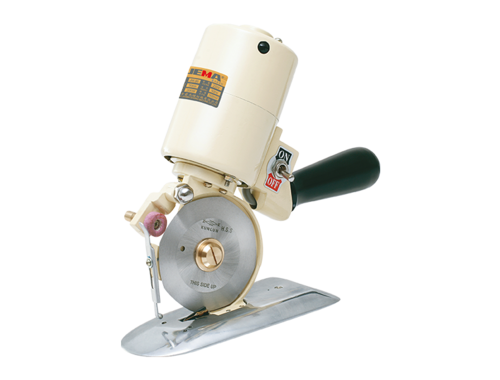
Features The JM-60/70 miniature cutting machine is suitable for cutting curves, small arc...
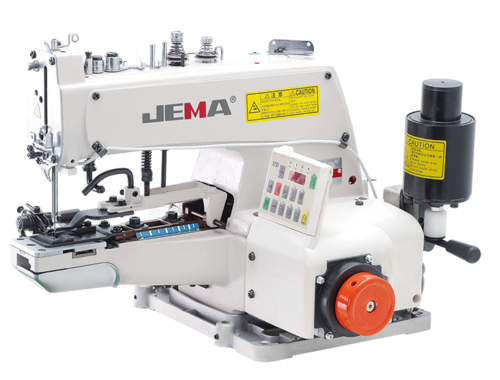
Features It is mainly used for sewing flat buttons with two holes or four holes. If attac...
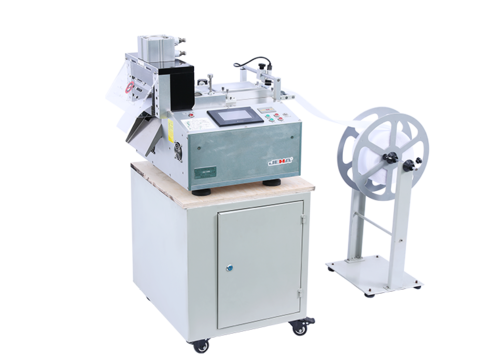
Features High speed: 120 pieces can be cut per minute. (Take 50mm length as an example) Hig...
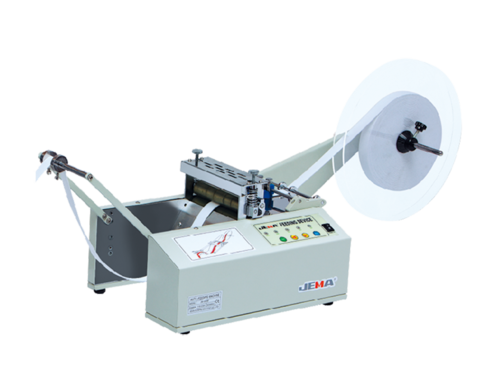
Features The fully automatic computerized belt feeder is a new type of multifunctional belt fe...

25 Years specializing in the production of various cutting machines.
©2021 Taizhou JEMA Sewing Machine Co., Ltd. Custom Elastic Tape Cutting Machine Manufacturers


 +86-576-88177528
 +86-576-88172167
 367# Guangxing Road, Xiachen Street, Jiaojiang District, Taizhou City, China.