

 EN
EN  英语
英语 中文简体
中文简体 西班牙语
西班牙语 越南语
越南语 葡萄牙语
葡萄牙语 土耳其语
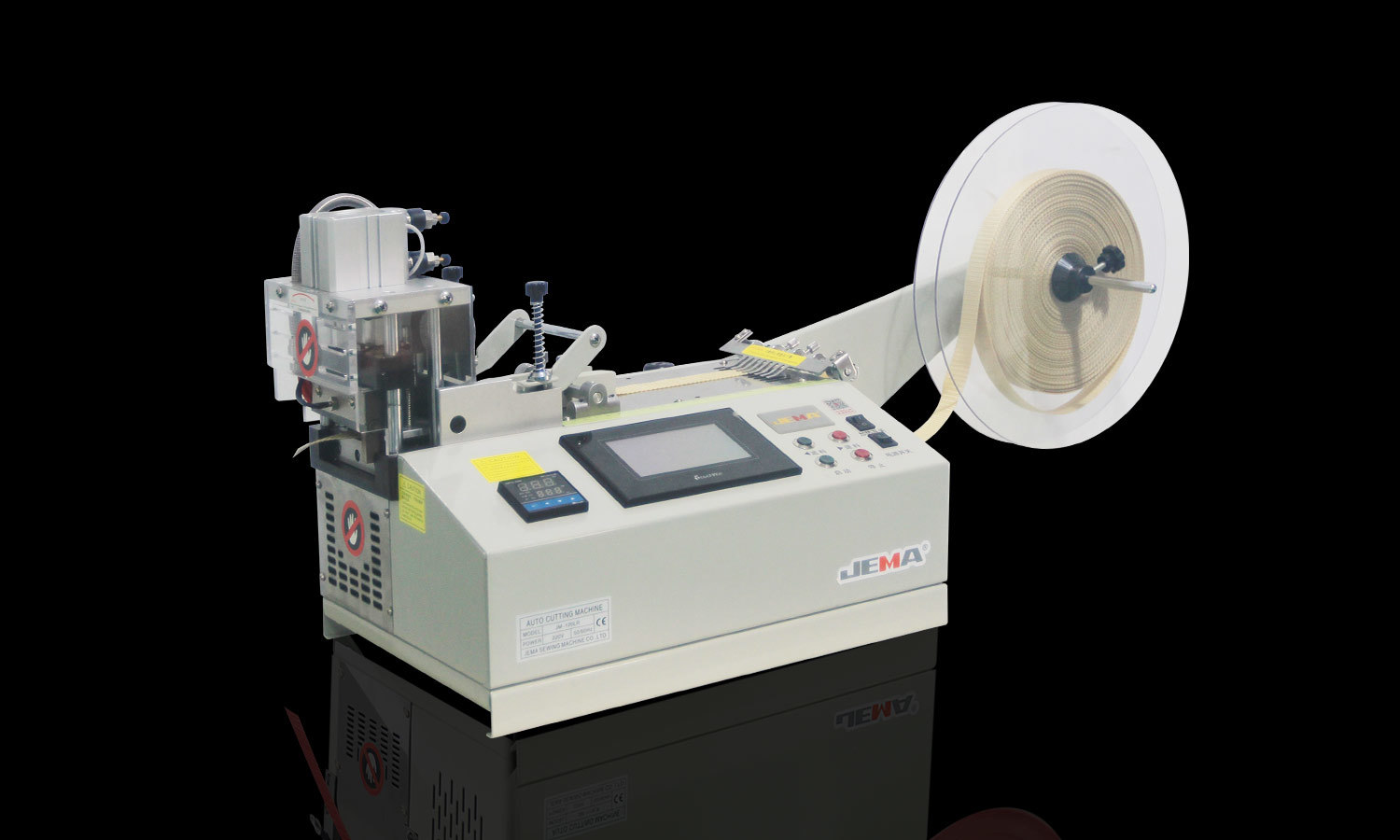
土耳其语Computer tape cutting machine (cold, hot) JM-120LR
The JM-120LR Computer Tape Cutting Machine (Cold and Hot Knife) is a handy machine when you need one...
Manufacturing lines that handle elastic materials run into a familiar set of troubles. Rubber squashes down under a pressing blade. Synthetic cloth frays at every cut edge. Multi-layer composites pull apart between plies. Traditional approaches—rotary shears, reciprocating knives, high-pressure waterjets—force operators to choose between edge finish, dimensional accuracy, and production speed. None of those methods delivers all three without compromise.
An Automatic Ultrasonic Cutting Machine takes a different path. Instead of pushing a blade through the workpiece by brute mechanical force, the system sends high-frequency vibrations—usually between 20 and 40 kHz—directly into the cutting tool. That rapid oscillation drops the friction at the blade-material contact point to a tiny fraction of what conventional tools generate. With less resistance, the cutting action needs far less downward pressure. For elastic materials that compress, stretch, or shift under load, that reduction in applied force leads directly to better shape retention and smoother cut faces.
Automation adds another dimension to the technology. Programmable motion paths, adjustable vibration settings, and integrated workpiece handling let the equipment follow complex contours across large panels with repeatable outcomes. A handful of application areas show particularly strong alignment with what ultrasonic cutting offers.
Elastic materials have physical traits that make mechanical separation tricky. They absorb and spread out stress rather than transmitting it cleanly to a cutting edge. So when a blade comes down, the workpiece often moves downward and outward before the tool ever breaks through the surface. That local distortion creates a chain of unwanted outcomes.
A rubber seal meant to hold a specific cross-sectional shape may come out of a die cutter with squashed edges or expanded width. Parts that need to fit into tight assembly gaps end up rejected or sent back for rework.
Edge quality also takes a hit. Woven elastic tapes and knit textiles start shedding threads at cut points unless someone applies edge sealing afterward. Laminated composites—especially those with carbon or glass reinforcement—frequently show delamination along the cut boundary, meaning the separate layers peel apart from each other.
Working conditions add further complications. Dry cutting of rubber compounds throws off fine dust that coats nearby machinery. High-speed friction cutting of thermoplastics melts material onto the blade surface, forcing frequent stoppages for cleaning.
Those persistent difficulties make a strong case for exploring alternatives that reduce cutting force, manage heat with care, and turn out edges that need no extra finishing work.
Ultrasonic cutting works on a principle quite unlike conventional shearing or abrasion. With the blade oscillating at ultrasonic frequencies, the interface between tool and material experiences rapid back-and-forth shear stresses. That vibrational energy softens the material locally through internal friction and molecular movement, effectively lowering its resistance to separation.
Several distinct physical effects contribute to better cutting outcomes.
Because the vibrating blade meets less resistance, the workpiece undergoes minimal compression. Elastic memory—the tendency of materials to bounce back to original shape—never gets triggered because the deformation barely happens at all. For jobs with tight tolerance requirements, that behavior offers a clear benefit.
Heat stays confined to a narrow band right next to the blade. For synthetic textiles and thermoplastic elastomers, that concentrated warmth causes a slight melting or fusing effect along the fresh cut margin. The resulting edge resists fraying, wicking, or layer separation without needing extra heat-sealing equipment or adhesive coatings.
The vibration also keeps sticky substances from clinging to the tool. Food products like nougat or soft cheese, which stick stubbornly to ordinary cutters, release easily from an ultrasonically active edge. Rubber formulations with high tackiness behave the same way—they do not build up on the blade, so cutting efficiency holds steady over longer production runs.
Automation brings its own set of improvements. Parameter profiles for different material types can be saved and recalled when changing over jobs. Built-in sensors track oscillation frequency and power consumption, feeding back information that adjusts for variations in material thickness or density. That kind of closed-loop monitoring helps maintain cut-to-cut consistency across large batch sizes or multi-shift operations.
Manufacturing experience across multiple sectors points to several material families that respond especially well to automatic ultrasonic cutting. The table below groups these categories by their cutting difficulties and the observed benefits.
| Material Category | Cutting Difficulties | Ultrasonic Cutting Response | Common Application Examples |
|---|---|---|---|
| Textiles & Non-Wovens | Frayed edges; loose thread formation; additional sealing steps required | Cuts and seals synthetic edges simultaneously; clean separation without unraveling | Elastic bands; woven tapes; synthetic fiber belts; multi-layer fabric shaping |
| Rubber & Elastomers | Stretching under blade pressure; shape distortion; rebound after cutting | Minimal downward force preserves original cross-section; smooth faces without compression marks | Window seals; industrial hoses; tire component preparation |
| Plastics & Packaging | Brittle fracture; dust creation; friction-induced melting | Localized micro-heat enables clean parting; edge sealing without widespread thermal damage | Injection-molded part trimming; shrink wrap cutting; blister packaging separation |
| Composite Materials | Layer delamination; fiber fraying; rapid tool wear | Low-pressure separation avoids inter-ply separation; clean fiber ends; reduced tool contact force | Carbon fiber panel trimming; fiberglass edge finishing; foam core shaping |
Textile operations gain a clear advantage from the combined cutting-and-sealing action in one pass. Woven elastic tapes—those found in garment waistbands and medical compression wraps—hold together without extra stitching or adhesive application. Multi-layer non-woven materials, used in filtration pads and insulation panels, separate cleanly without shifting between layers.
Rubber processing benefits equally. Extruded profiles like window seals and weatherstripping demand exact length cutting with square, clean ends. Guillotine cutters often pinch and ovalize the shape. Rotary blades produce ragged edges. Ultrasonic systems turn out clean transverse cuts while leaving the original extrusion profile unchanged.
Packaging operations appreciate the dust-free cutting of thermoformed trays and blister packs. Brittle plastics such as polystyrene and acrylic tend to crack under mechanical stress, but the gentle separating action of ultrasonic vibration avoids crack propagation. Shrink films, which stretch and wrinkle easily, cut cleanly without distortion.
Composite applications in higher-end sectors show consistent edge finish and less material waste. Carbon fiber prepregs—fabric combined with uncured resin—cut without smearing resin onto the surface. Foam core materials used in sandwich panels keep their cellular structure intact, with no crushing at the cut boundary.
Food processing throws a curveball that industrial material cutting rarely does. A lot of food products are soft, sticky, layered, or just plain temperamental when temperatures shift — and that makes standard cutting equipment harder to rely on.
Cheese, baked goods, frozen items, confectionery — these all tend to run into the same handful of headaches. Sticky stuff clings to blades. Soft structures get squashed under pressure. Frozen products crack if you push a blade through too hard.
This is where ultrasonic cutting earns its place. High-frequency vibration cuts down on friction between blade and product, so the blade moves through with far less resistance. The result is better shape retention and more consistent portioning.
Take nougat, caramel-filled pieces, or other sticky confections — ultrasonic cutting gives a much cleaner separation. Because there's less drag at the contact point, the material doesn't get pulled or dragged as the blade passes through, so edges come out smoother and portions more uniform.
Bakery products benefit in their own way. A layered cake with cream filling can lose its structure fast if too much force goes into the cut. Less pressure means the layers stay put and the surface stays clean.
Frozen goods are another good example — frozen seafood blocks, ice cream, that sort of thing. A traditional blade applying sudden force can just shatter them. Vibration-based cutting separates the material more gently, which cuts down on cracking and fragmentation.
Cheese follows a similar logic. Hard and semi-soft varieties end up with cleaner edges, and softer cheeses stick to the blade far less than they would otherwise.
What food manufacturers usually care about boils down to a few things: cleaner cuts, less deformation, less sticking, and portions that actually look consistent from batch to batch. Pair that with automated production lines, and you've got a workflow that's noticeably more stable overall.
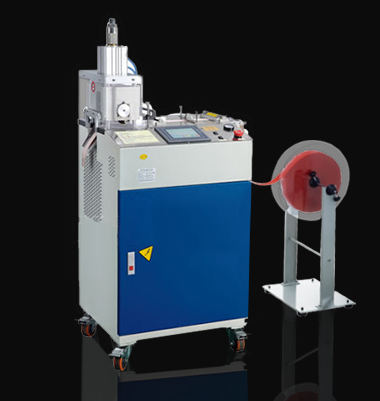
A cutting head by itself doesn't solve much. What actually determines whether ultrasonic cutting works at scale is everything around it — movement control, material positioning, how well the whole process is coordinated.
Take material placement. Flexible materials shift during feeding all the time — tension changes, conveyor movement, small differences in manual positioning. Automated systems can pick up on these shifts and adjust the cutting path on the fly, so the cut stays close to where it's supposed to be.
Feed speed matters just as much. Ultrasonic cutting depends on the interplay between vibration and material resistance — go too fast and edge quality suffers, go too slow and heat starts building up around the cut. Automated systems help keep that balance in check as material conditions change.
A few automation functions tend to matter most:
Three-dimensional cutting is where automation really opens things up. Flat materials are straightforward, but curved foam parts, interior components, and other shaped materials demand a lot more flexibility from the equipment. Robotic arms or multi-directional systems can trace complex contours while keeping the blade at the right angle throughout.
And when feeding, cutting, and stacking are all connected rather than handled separately, there's simply less manual handling — which means fewer chances for the product to shift or get damaged along the way.
Ultrasonic cutting isn't a universal answer. Plenty of materials do just fine with conventional methods, and it's really the trickier cases — where edge quality and dimensional accuracy both matter — that make the strongest case for switching.
Some good examples:
Multi-layer structures are a particularly good fit. Cutting several layers at once with a traditional blade often causes them to shift relative to each other, but the lower pressure involved with ultrasonic cutting keeps everything aligned — useful for stacked materials or more complicated shapes.
Large contour cutting is another strong candidate. Detailed outlines often mean constant tooling changes with conventional methods, whereas ultrasonic systems paired with automated movement can trace changing paths without swapping tools for every new shape.
That said, material compatibility still needs to be checked case by case. Very thick rubber, heavily filled compounds, or temperature-sensitive materials don't always respond the way you'd expect. Testing with real samples is really the only way to know for sure whether it's the right fit.
Equipment settings can't stay fixed across every job — different elastic materials respond differently to vibration, pressure, and heat, so the setup has to adjust accordingly.
A thinner blade cuts with less resistance, while a thicker one holds up better against heavier materials. Which one makes sense depends on thickness, flexibility, and the shape of the cutting path.
Frequency plays a role too. Some materials need finer vibration to keep heat down, while others need a stronger cutting action to get through thicker sections.
Amplitude is another lever. Push it higher and you get more cutting force — but also more heat. For temperature-sensitive materials, that trade-off between vibration strength and cutting speed needs careful balancing.
Just as important is how well the vibration source connects to the cutting tool itself. If that connection isn't solid, energy doesn't transfer efficiently, and cutting performance suffers. This is usually where an experienced Ultrasonic Cutting Machine Manufacturer earns their keep — matching these components to the material and the production requirements at hand.
For factories running multiple materials through the same line, saved parameter presets make a real difference. Switching between products becomes a matter of loading a setting rather than manually recalibrating everything each time.
The settings that typically need adjusting:
The point is flexibility — the equipment should respond to whatever material it's handling, not force every job through one fixed configuration.
Ultrasonic cutting has carved out a fairly specific niche. It's not meant to replace every traditional method — different materials and production goals call for different tools.
Where it earns its place is in situations where the usual cutting problems start hurting product quality:
Whether it makes sense to bring ultrasonic cutting into a production line comes down to material behavior, what the production line actually needs, how automated things already are, and how strict the quality bar is.
For manufacturers dealing with flexible materials, food products, synthetic fabrics, rubber profiles, or composite structures, it's a genuinely useful option when conventional cutting keeps running into the same limitations.
As new materials keep showing up across different industries, cutting requirements will keep evolving too. The ability to cut with less pressure, manage heat better, and produce cleaner edges gives ultrasonic technology plenty of room to keep adapting.
Before committing to it for regular production, though, working closely with an experienced Ultrasonic Cutting Machine Manufacturer and running tests on actual production materials remains the sensible step.
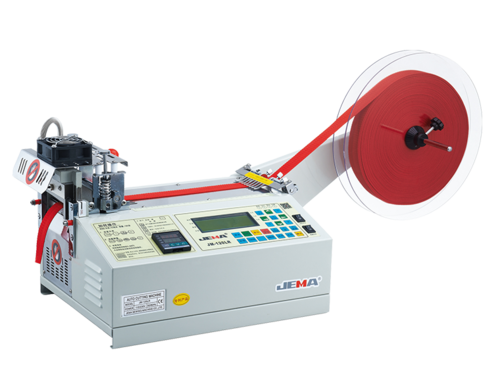
The JM-120LR Computer Tape Cutting Machine (Cold and Hot Knife) is a handy machine when you need one...
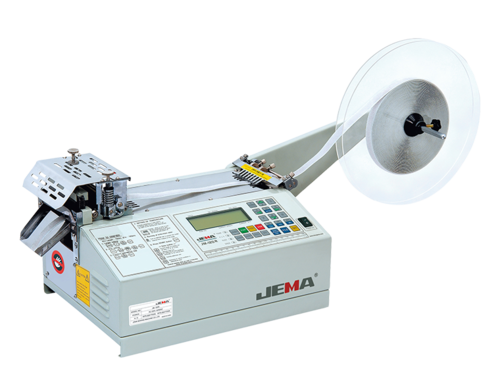
Fully automatic cutting, simple operation, wide application range and high cutting quality. It ca...
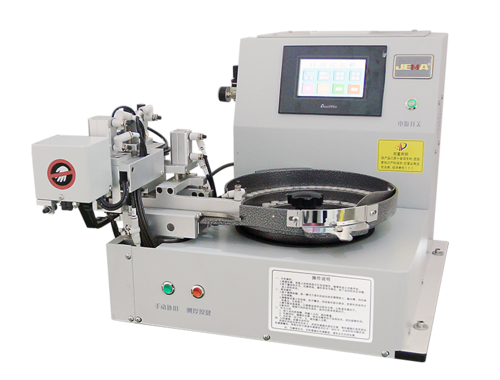
Features: 1. One-key width and thickness measurement function: When changing differe...
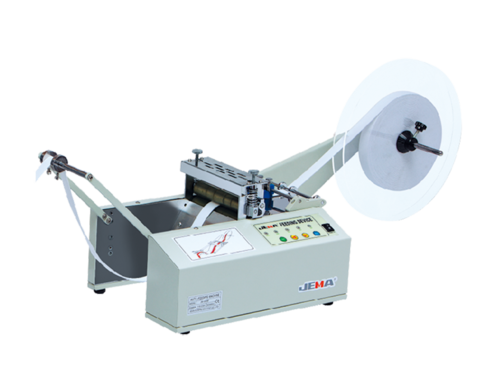
Features The fully automatic computerized belt feeder is a new type of multifunctional belt fe...

25 Years specializing in the production of various cutting machines.
©2021 Taizhou JEMA Sewing Machine Co., Ltd. Custom Elastic Tape Cutting Machine Manufacturers


 +86-576-88177528
 +86-576-88172167
 367# Guangxing Road, Xiachen Street, Jiaojiang District, Taizhou City, China.