

 EN
EN  英语
英语 中文简体
中文简体 西班牙语
西班牙语 越南语
越南语 葡萄牙语
葡萄牙语 土耳其语
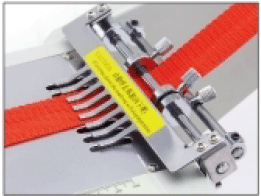
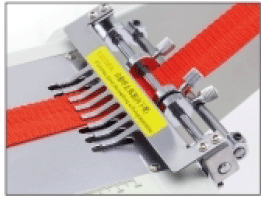
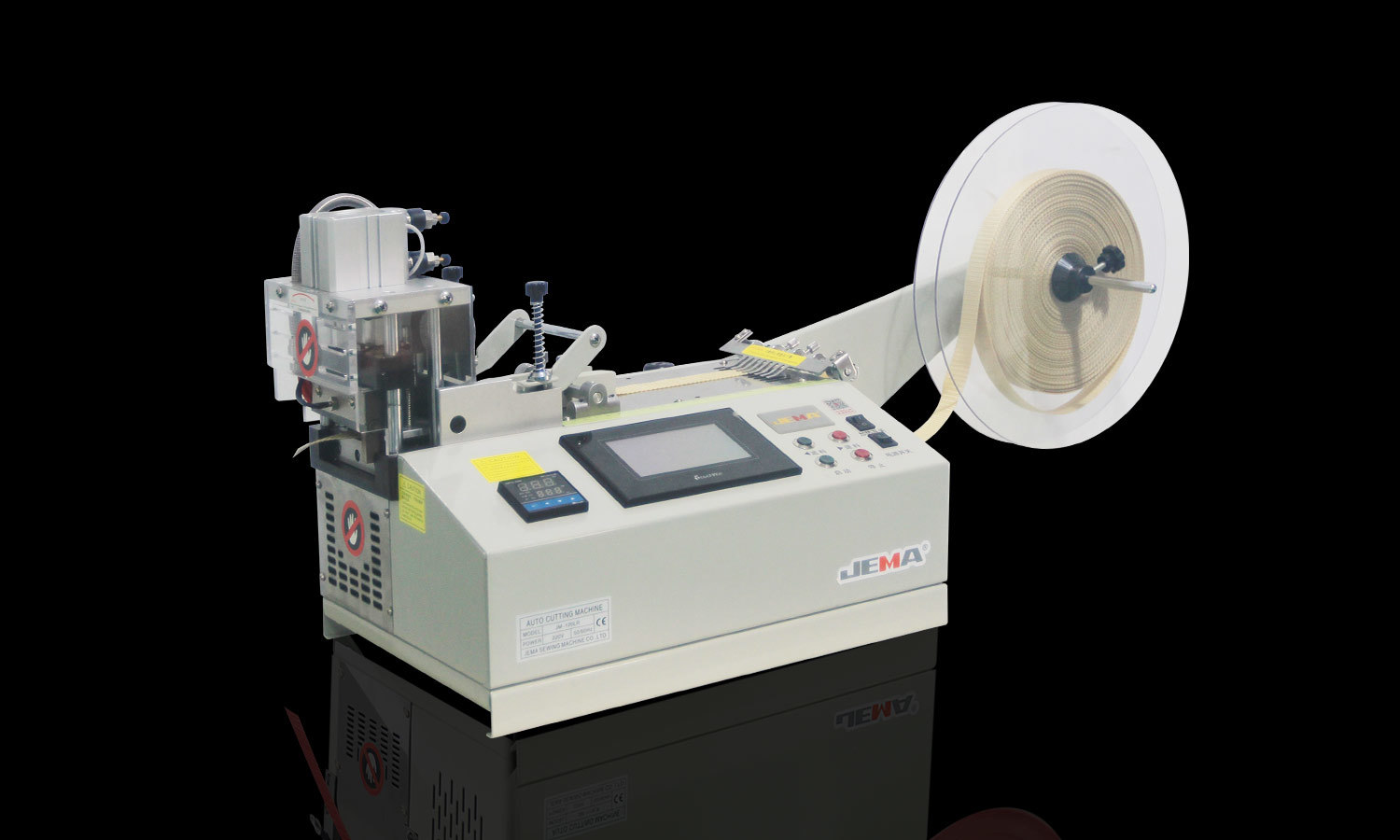
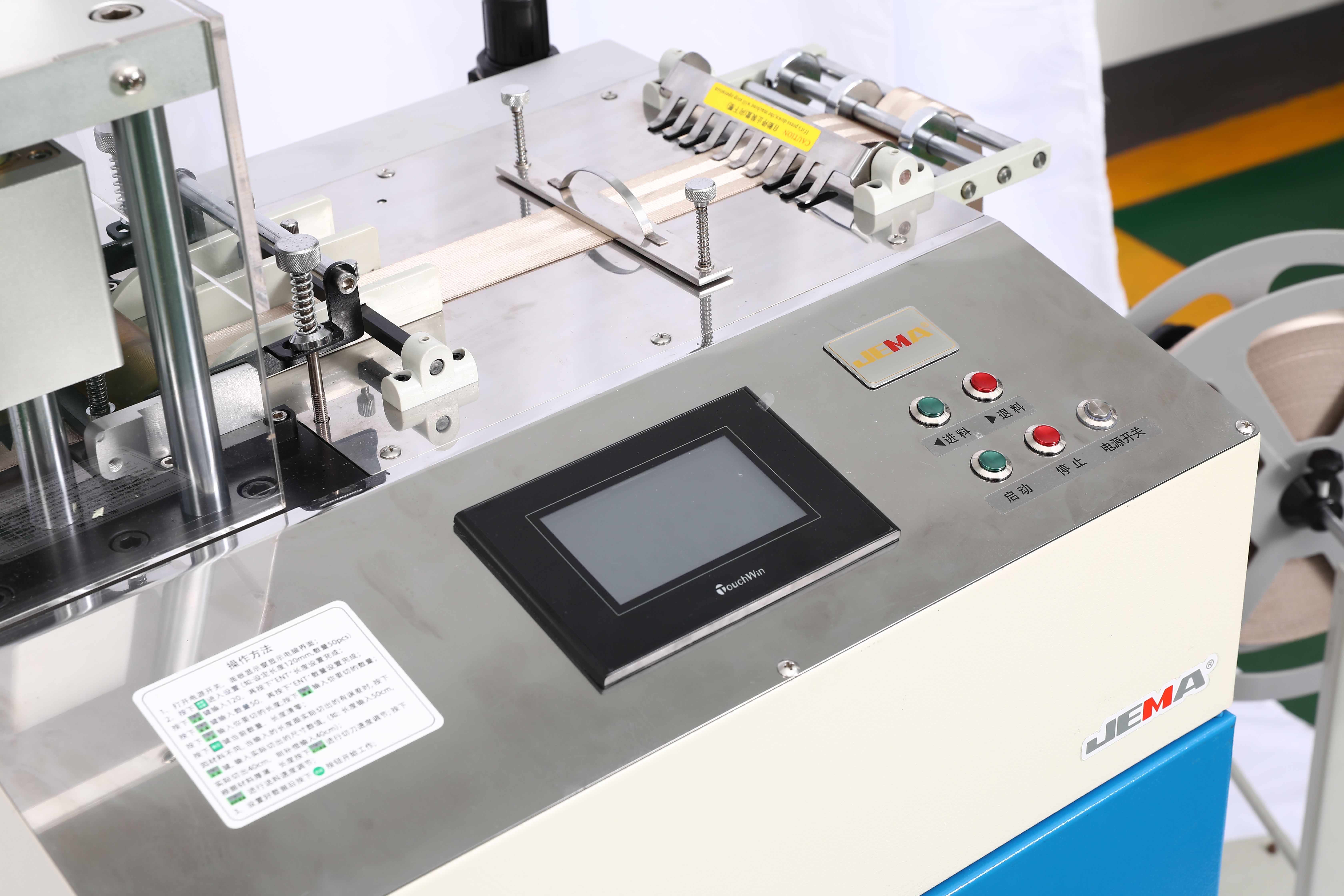
土耳其语Computer tape cutting machine (cold knife) JM-120L
Fully automatic cutting, simple operation, wide application range and high cutting quality. ...
Cutting is one of the earliest production stages in textile manufacturing, yet its influence continues throughout sewing, joining, inspection, and final assembly. A clean edge can simplify later processing, while an unsuitable cutting method may create unnecessary handling before the next operation begins.
Fabric itself often determines which cutting process is more suitable. Surface texture, fiber arrangement, thickness, flexibility, and edge behavior all influence how material responds during cutting. Looking only at machine capability rarely provides enough information for making a practical decision.
Mechanical blade cutting has remained common for many kinds of fabric because its working principle is straightforward and adaptable. Ultrasonic cutting follows another approach, producing separation through high-frequency vibration while helping reduce loose edges on suitable synthetic materials. Neither process fits every material equally well.
An Automatic Ultrasonic Cutting Machine is often selected when production involves fabrics that benefit from cleaner sealed edges, while traditional blade cutting continues to serve many woven and layered materials where thermal sealing is unnecessary.
Choosing between both methods usually begins with understanding the fabric rather than the equipment.
Although both methods separate fabric into required shapes, working processes are not the same.
Blade cutting relies on direct mechanical contact. A sharp blade moves through material, separating fibers according to the programmed cutting path. Since no heat-based sealing takes place, edge condition depends largely on fabric structure.
Ultrasonic cutting follows another process. High-frequency vibration helps separate suitable materials while allowing synthetic edges to close during cutting. Loose fibers may become less noticeable on fabrics that respond well to this method.
Each approach creates different characteristics during production.
Blade cutting often offers:
Ultrasonic cutting often provides:
Neither method replaces the other completely. Material properties remain the deciding factor.
Many fabrics continue to perform well under mechanical cutting because their structure does not require thermal edge sealing.
Natural woven materials usually separate cleanly with a sharp blade. Since fibers respond differently from synthetic materials, maintaining an accurate cutting edge often becomes more important than applying heat during separation.
Thicker fabrics also tend to suit blade cutting. Dense layers may require stronger mechanical penetration, allowing fabric structure to remain stable throughout cutting.
Materials with rough textures or layered construction often behave similarly. Direct cutting avoids unnecessary thermal influence while maintaining original material characteristics.
Several situations commonly favor blade cutting.
Material condition also matters. Soft fabrics, stiff fabrics, and blended constructions may respond differently even when their appearance looks similar.
Selecting a cutting method after observing actual material behavior usually creates a smoother production process than relying only on general product categories.
Synthetic materials often behave differently during cutting because heat influences their edge condition.
When suitable fabrics pass through an Automatic Ultrasonic Cutting Machine, vibration and localized heat work together during separation. Instead of leaving loose fibers along the edge, some synthetic materials form a cleaner boundary as cutting progresses.
Nonwoven materials often show similar characteristics. Since edge stability is important during later handling, sealed edges may reduce additional processing before sewing or assembly.
Thin synthetic sheets may also respond smoothly because material remains relatively stable while following the programmed cutting path.
Even within synthetic materials, results are not always identical. Surface coating, thickness, flexibility, and fiber arrangement all affect cutting behavior. Small production trials often provide useful information before continuous manufacturing begins.
Choosing ultrasonic cutting therefore depends more on material compatibility than on production volume alone.
Edge condition becomes increasingly important once fabric leaves the cutting station. Sewing, folding, joining, inspection, and packaging all depend on how well the edge remains after cutting.
Mechanical cutting leaves an edge created purely through blade contact. Fabric quality largely determines whether fibers remain compact or begin separating during handling.
Ultrasonic cutting may create another result on compatible synthetic materials. Since cutting and sealing happen together, edge appearance often changes compared with blade-cut material.
| Comparison Item | Blade Cutting | Ultrasonic Cutting |
|---|---|---|
| Working method | Mechanical contact | High-frequency vibration |
| Edge condition | Depends on fabric structure | May seal suitable synthetic edges |
| Material range | Suitable for many fabric types | Suitable for selected synthetic materials |
| Later processing | Depends on edge stability | May reduce loose edge handling |
| Production rhythm | Follows mechanical cutting process | Depends on material compatibility |
Edge quality should always be evaluated together with later production steps. A clean edge during cutting has little value unless it also supports sewing, assembly, or other manufacturing processes.
Material is only one part of the decision. Production conditions often shape the final choice just as much. A fabric that performs well under one cutting method may behave differently after product size, sewing sequence, or workshop arrangement changes.
Some products contain long straight lines, while others include small curves, narrow corners, or repeated openings. Every shape changes how fabric moves during cutting. Stable material support often becomes more valuable than simply increasing cutting speed.
Fabric thickness also deserves attention. Thin materials may shift during handling, while heavier layers require steady separation from beginning to end. Multiple layers introduce another consideration because every piece should remain aligned after cutting.
Several practical observations usually help before production starts.
Looking beyond one production step often avoids unnecessary adjustments later.
Cutting quality depends not only on machine design but also on everyday care. Even a well-planned production line gradually changes when dust, loose fibers, or worn components begin affecting normal operation.
Blade cutting provides a simple example. A blade that has worked for a long period may no longer separate fibers smoothly. Instead of producing a clean edge, fabric may begin showing loose threads or slight distortion around the cutting line.
An Automatic Ultrasonic Cutting Machine also benefits from regular inspection. Fabric residue can gradually collect around working areas. Cleaning those locations helps maintain smooth material movement throughout production.
Routine work often includes several simple actions.
Small maintenance habits usually create a steadier production rhythm than waiting until visible problems appear.
Factories rarely select a cutting method without observing actual material behavior. Fabric that looks almost identical on the outside may react quite differently once cutting begins.
Small production samples often provide useful information. Edge condition, material movement, shape consistency, and handling after cutting are usually examined together. One cutting process may produce a clean appearance, while another may simplify the following sewing operation. Looking at only one result rarely provides a complete picture.
An Ultrasonic Cutting Machine Manufacturer may offer application suggestions according to fabric characteristics and processing requirements. Such information can support early planning, although production evaluation normally continues with actual material testing inside the workshop.
Equipment compatibility also deserves attention. Cutting should connect naturally with feeding, sewing, inspection, and packaging rather than becoming an isolated process. When every stage follows a similar production rhythm, daily operation often becomes easier to manage.
Blade cutting and ultrasonic cutting each serve different production needs because fabrics differ in structure, flexibility, and edge behavior.
Natural woven materials, heavy fabrics, and layered products often continue to suit mechanical cutting. Many synthetic materials respond differently and may show cleaner edges after passing through an Automatic Ultrasonic Cutting Machine, especially when sealed edges support later processing.
Choosing between both methods becomes a practical comparison instead of a fixed rule. Fabric composition, product shape, production sequence, maintenance routines, and later manufacturing steps all deserve equal attention.
A balanced evaluation before production begins often supports smoother cutting, steadier processing, and more consistent results throughout the complete manufacturing workflow.
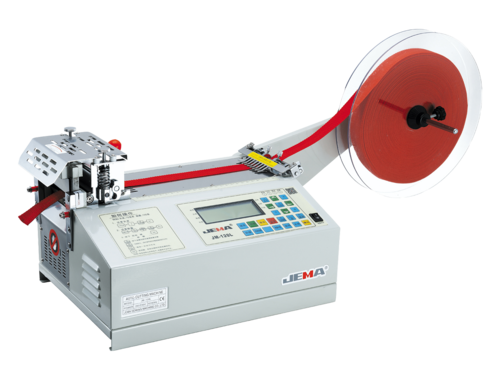
Fully automatic cutting, simple operation, wide application range and high cutting quality. ...
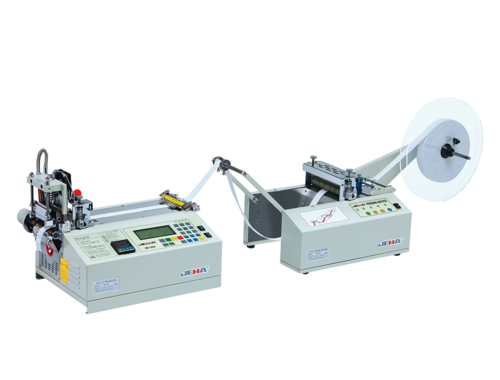
Fully automatic cutting, simple operation, wide application range and high cutting quality. ...
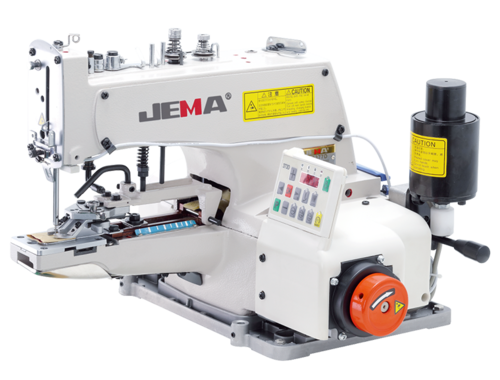
Features Quickly adapt to a variety of sewing requirements. Corresponding to the changes in sewing...
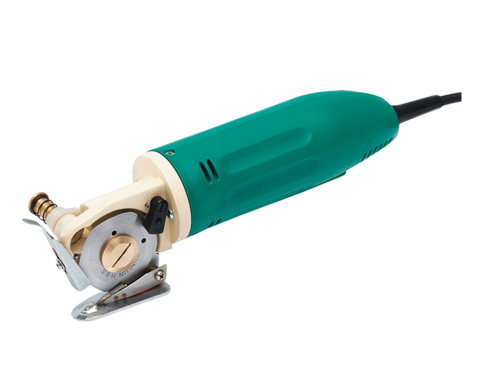
Features JM-6070 micro cutting machine is suitable for cutting curves, small arcs and sma...

25 Years specializing in the production of various cutting machines.
©2021 Taizhou JEMA Sewing Machine Co., Ltd. Custom Elastic Tape Cutting Machine Manufacturers


 +86-576-88177528
 +86-576-88172167
 367# Guangxing Road, Xiachen Street, Jiaojiang District, Taizhou City, China.