

 EN
EN  英语
英语 中文简体
中文简体 西班牙语
西班牙语 越南语
越南语 葡萄牙语
葡萄牙语 土耳其语
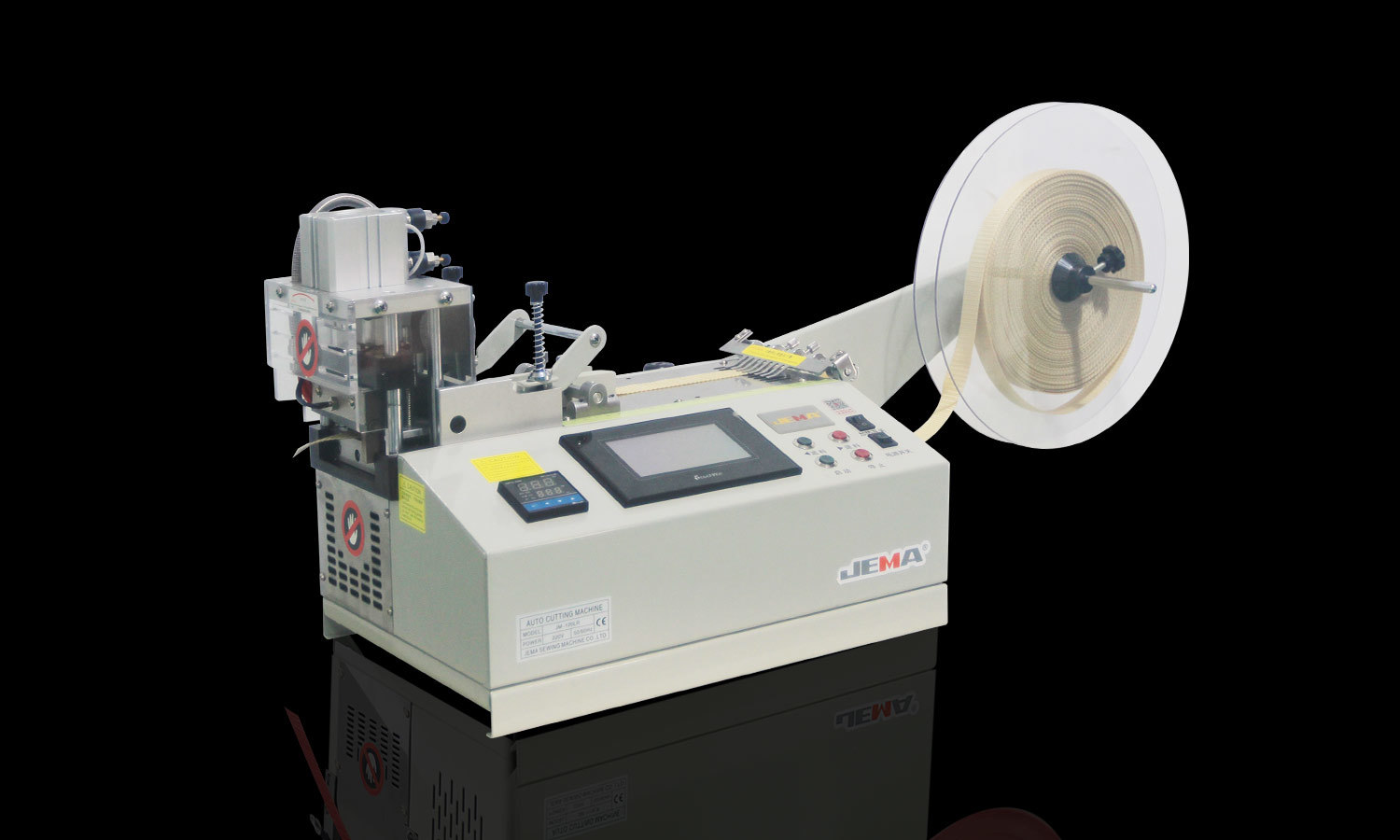
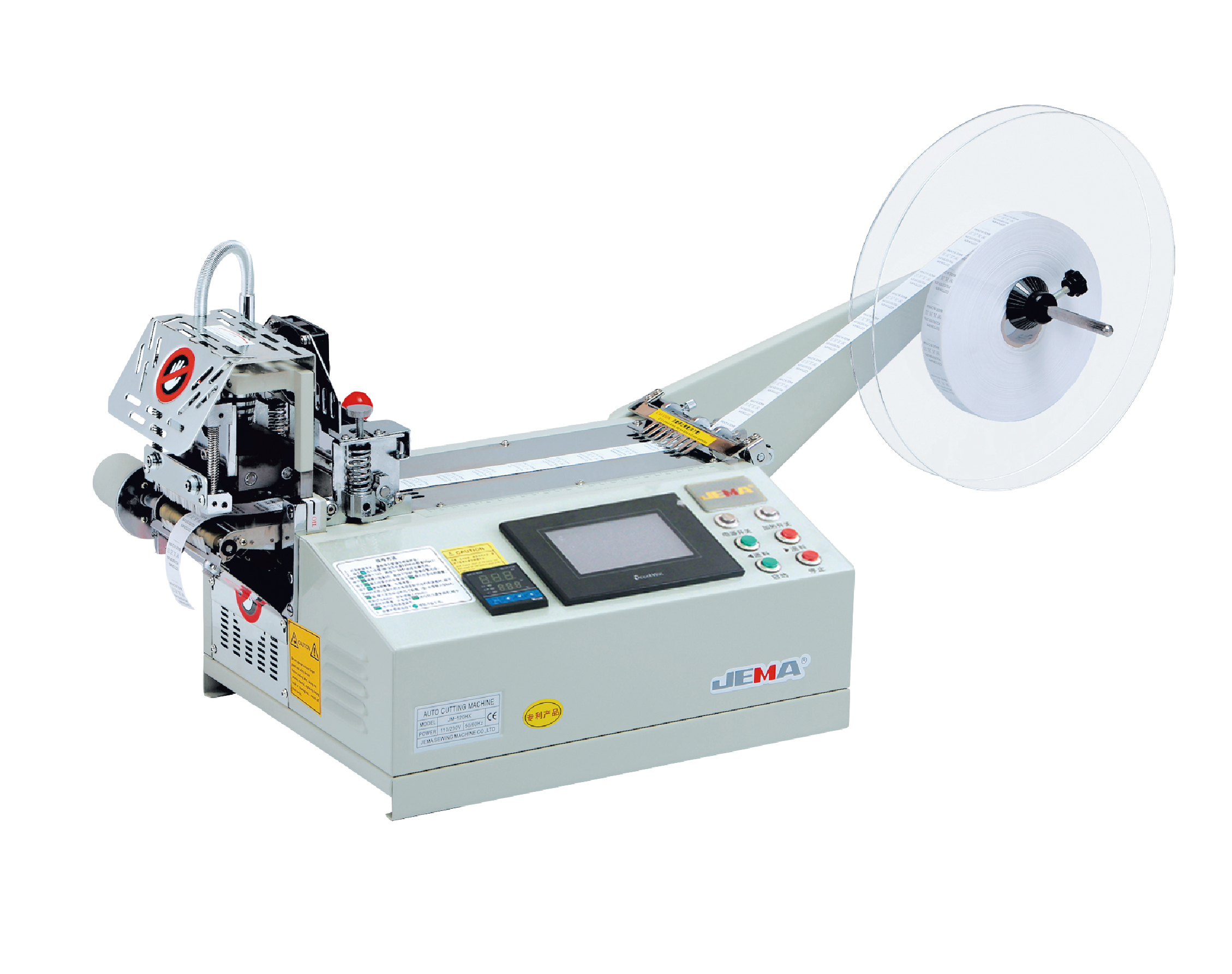
土耳其语Computer tape cutting machine (hot knife) JM-120H
The JM-120H Computer Tape Cutting Machine (Hot Knife) is the kind of machine that makes repeat cutti...
A Cutting Tape Machine takes a different approach to processing adhesive tape than many people assume. The machine accepts a wide master roll of tape and slices through the entire roll at once. The tape stays wound on its core throughout the process. No unwinding happens, no rewinding happens. The blade cuts through the layers of tape from the outside edge straight to the core.
The operation involves mounting the wide roll on a rotating shaft. A circular blade presses against the side of the rotating roll and cuts off individual widths one slice at a time. Each pass of the blade removes one narrow roll from the wide roll. The process repeats until the entire master roll has been converted into smaller rolls.
This method suits lower-volume output and smaller jobs. The machine does not need to be re-threaded between cuts, so setup time stays short. The simplicity of the log cutter approach makes it accessible for operations that do not require high throughput.
A slitting machine works on a different principle. Instead of cutting through a stationary roll, the machine unwinds the master roll completely. The flat web of tape passes through a series of blades that slit the material lengthwise. The slit strips then get rewound onto separate cores, producing multiple narrow rolls from one wide roll.
The process runs continuously. The tape feeds through the machine at speed, passes the blades, and winds onto individual shafts. The unwind tension, blade positioning, and rewind tension all require control to produce consistent results. The setup takes longer than a cutting machine, but the output volume far exceeds what a log cutter can produce.
Slitting machines handle high-volume production. A single pass through the machine can convert a wide roll into dozens of narrow rolls. The finished rolls come off the machine ready for packaging or further processing.
The blade type reflects the intended output of each machine. A Cutting Tape Machine uses a single rotating blade that chops through the entire thickness of the roll. The blade moves from the outer edge to the centre, cutting through all layers at once. The action is a single pass per roll.
A slitting machine uses razor blades or rotary shear blades that cut the moving web of tape. The tape passes through the blades while flat, and the blades slit the material along its length. The cutting action is continuous rather than intermittent.
The blade design also affects edge quality. The chop method used by a Cutting Tape Machine can sometimes produce edges that are less neat. The adhesive may smear as the blade passes through the layers. A slitting machine, with its tension controls and specialized blades, delivers cleaner, smoother edges.
A Cutting Tape Machine requires the operator to mount the master roll, set the blade position, and make each cut one at a time. The process is straightforward but sequential. Each roll comes off the machine before the next cut can be made.
A slitting machine handles the tape continuously. The master roll unwinds, the tape passes through the slitting section, and the finished rolls wind onto individual shafts. The operation runs until the master roll is fully converted. The continuous nature of the process allows higher throughput.
The setup time for each machine type differs. A Cutting Tape Machine requires minimal setup because the tape does not need to be threaded through the machine. A slitting machine requires threading the tape through the blades and tension rollers, which takes more time but pays off in higher output.
| Characteristic | Cutting Tape Machine | Slitting Machine |
|---|---|---|
| Tape handling | Stationary roll | Continuous unwinding |
| Cutting action | Single blade through full roll | Multiple blades on moving web |
| Setup time | Short | Longer |
| Output format | Individual rolls sequentially | Multiple rolls simultaneously |
| Edge quality | May show smearing | Cleaner edges |
The output format tends to drive the configuration of each machine type fairly directly. A log cutter tends to produce individual rolls from a master roll. Each roll comes off the machine as a finished product. The machine design tends to focus on making that single cut accurately and efficiently, with the blade positioned fairly precisely for each pass.
A slitter rewinder tends to produce many rolls from a single master roll in one pass. The machine unwinds the tape, slits it into multiple strips, and rewinds each strip onto its own core. The design tends to involve multiple rewind shafts, tension controls for each strip, and a blade system that can handle several cuts at once.
The volume expectations for each machine type tend to differ quite a bit. A log cutter tends to suit operations that process smaller quantities. A slitter rewinder tends to suit operations that need to convert large volumes of tape fairly quickly. The machine choice probably should reflect the production volume required.
Edge quality tends to matter for certain tape applications. A clean edge tends to look more professional and often performs a bit better when the tape gets applied to surfaces. A rough or uneven edge can affect the appearance of the finished product somewhat.
The chop method used in a log cutter can cause some adhesive smearing. The blade passes through the layers of tape, and the adhesive can spread onto the cut edge. This smearing probably doesn't affect the tape's function in many applications, but it can become an issue where appearance matters more.
A slitter rewinder with proper tension controls tends to produce cleaner edges. The tape moves through the blades in a flat state, and the cutting action tends to be fairly precise. The edges tend to come out smooth and uniform, with fairly minimal adhesive smearing.
The complexity of the slitting process seems to contribute to this edge quality difference. Tension controls tend to keep the tape flat and stable as it passes through the blades. That stability tends to let the blades make cleaner cuts without dragging the adhesive around.
The tape processing spectrum tends to include a middle ground between manual dispensers and industrial machinery. An Automatic Cutting Machine sits somewhere in that middle space. The machine tends to feed, measure, and cut tape to preset lengths in a single operation.
These machines tend to serve packaging lines, small workshops, and office environments where operators need to dispense individual tape pieces fairly repeatedly. The machine accepts a roll of tape, pulls out a measured length, and cuts it automatically. The operator usually doesn't need to tear or cut the tape by hand.
The scale of an Automatic Cutting Machine tends to differ quite a bit from industrial slitters and log cutters. The machine tends to process one roll at a time and produces individual pieces rather than finished rolls. The output tends to suit a fairly different set of needs than the other two machine types.
A few scenarios where an Automatic Tape Dispenser Cutting Machine tends to work well:
The choice between a log cutter and a slitter rewinder tends to come down to production requirements more than anything else. A log cutter processes one roll at a time and tends to suit lower-volume operations. A slitter rewinder tends to handle higher-volume continuous production reasonably well.
Setup time and ease of operation tend to matter too. A log cutter tends to require less setup time since the tape generally doesn't need much threading through the machine. A slitter rewinder tends to take longer to set up but can process more tape in a single run.
Edge quality requirements should probably guide the decision to some extent. If the finished rolls need fairly clean, smooth edges, a slitter rewinder tends to be the better fit. If edge quality matters less for the application, a log cutter may work just fine.
The trade-offs between speed, precision, and complexity tend to shape the final decision. A log cutter tends to offer simplicity and quicker setup but somewhat lower output. A slitter rewinder tends to offer higher output and cleaner edges but usually requires more setup time and operator skill.
The choice probably isn't really about which machine is better in some absolute sense—it tends to come down to which machine better serves the specific production needs at hand. An operation that processes small quantities of different tape widths may lean toward a log cutter. An operation that processes large volumes of the same tape widths may lean toward a slitter rewinder instead. Both machines tend to have their place in tape processing, depending on what the job actually calls for.
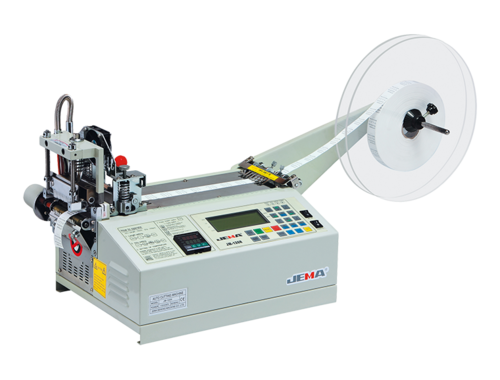
The JM-120H Computer Tape Cutting Machine (Hot Knife) is the kind of machine that makes repeat cutti...
.png?imageView2/2/w/500/h/500/format/jp2/q/100 "Multifunctional computerized tape cutting machine (cold knife) JM-150L")
The JM-150L Multifunctional Computerized Tape Cutting Machine (Cold Knife) is built for cutting jobs...
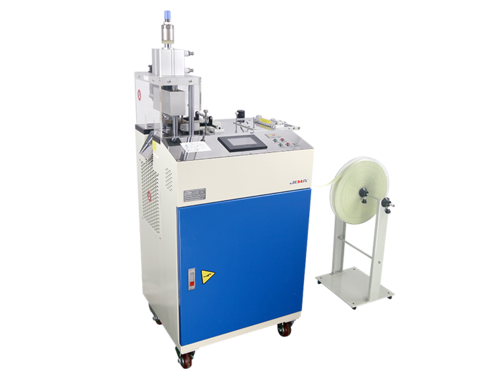
The JM-2200 Ultrasonic Computerized Tape Cutting Machine (Right Angle / Corner) is one of those mach...
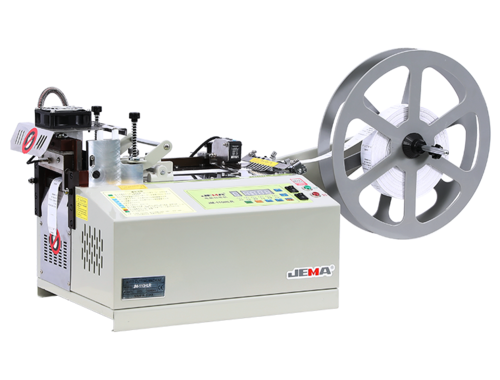
high functionality Speed: 95 pieces can be cut per minute. (Take 50mm length as an exampl...

25 Years specializing in the production of various cutting machines.
©2021 Taizhou JEMA Sewing Machine Co., Ltd. Custom Elastic Tape Cutting Machine Manufacturers


 +86-576-88177528
 +86-576-88172167
 367# Guangxing Road, Xiachen Street, Jiaojiang District, Taizhou City, China.