English
 Español
 Português
 Tiếng Việt
 Türk
 简体中文

Ultrasonic Cutting Machine for Fabric is one of the first steps in textile manufacturing, whether the end product is clothing, home textiles, car interiors, or industrial materials. To save time, factories often stack several layers of fabric and cut them into the same shape in one pass. That brings its own headaches. The top layers may get a different cut from the bottom ones, the fabric can shift and spoil alignment, and some materials end up with rough or uneven edges.
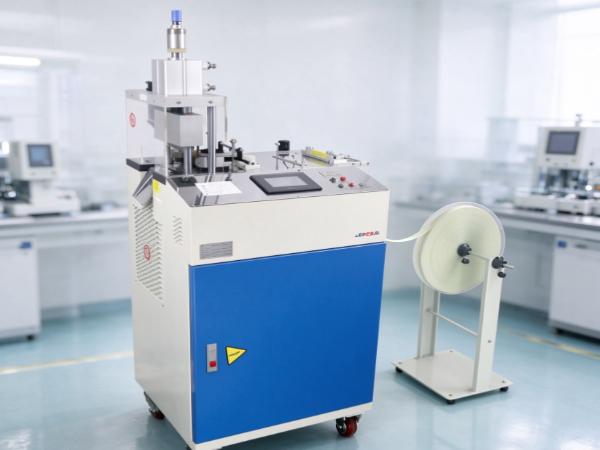
Ultrasonic cutting machines take a different route. They don't rely only on a mechanical blade. High-frequency vibration produces a small amount of heat right at the cut, which separates certain synthetic fabrics and seals their edges at the same time.
So can they handle multiple layers? Yes, in the right situations. How many layers, though, depends on the fabric type, the material thickness, how the layers are stacked, the machine setup, and the cutting method.
Not every fabric behaves the same. A machine that copes well with several layers of thin synthetic cloth may struggle with a thick, loose, or natural material. Knowing where those differences lie helps manufacturers decide when ultrasonic cutting is worth using for stacked production.
How Does Ultrasonic Cutting Work When Processing Multiple Fabric Layers?
An ultrasonic cutting machine moves a vibrating tool along the planned cutting path. The vibration, combined with contact between the tool and the fabric, produces heat where the cut is made.
On certain synthetic fabrics, that local heat softens or melts the material next to the edge. As the blade passes through, the fabric parts and the edge often seals.
Conventional cutting is different. A standard blade separates fibers mainly through mechanical force, while an ultrasonic tool uses vibration, contact, and local heat together.
With a stack of layers, the tool must pass through the whole pile. The top layer meets the blade first, so the cutting action has to stay consistent all the way down.
Several conditions shape the result:
- Material compatibility: Synthetic fabrics that respond to local heat generally suit ultrasonic cutting best.
- Total material thickness: The machine must be able to cut through the entire stack.
- Layer arrangement: The layers should stay properly aligned while cutting.
- Cutting tool condition: The blade needs steady contact with the material.
- Machine configuration: Different designs suit different cutting jobs.
The point to remember is that a good ultrasonic blade alone isn't enough. The machine and the material setup have to work as a whole.
Before bringing ultrasonic cutting into regular production, manufacturers should test their actual fabric combination.
Which Types of Fabrics Can Be Cut in Multiple Layers?
Fabric composition is a major factor. Ultrasonic cutting is closely tied to synthetics because many of them soften under local heat.
Polyester is the usual example. It goes into clothing, bags, curtains, car textiles, and many industrial products, and its thermoplastic nature makes it workable for ultrasonic cutting in many cases.
Nylon can also be processed this way. It appears in sportswear, outdoor gear, technical textiles, and industrial fabrics. Depending on its structure and thickness, it can suit an ultrasonic system.
Some nonwovens can be cut in layers too. They're used in medical products, filtration, packaging, and hygiene goods, and their fiber structure and composition decide how they react to ultrasonic vibration.
Even among synthetics, behavior varies. Coatings, blended fibers, fabric density, and surface treatments can all change the outcome.
Natural fabrics are harder. Cotton, linen, and wool don't melt like thermoplastic fibers. Ultrasonic cutting may still separate them, but it usually doesn't give the same heat-sealed edge.
This table shows how different fabrics may respond to multilayer ultrasonic cutting.
| Fabric Type | Suitability for Ultrasonic Cutting | Main Considerations |
|---|---|---|
| Polyester | Generally suitable | Fabric thickness and density influence cutting results. |
| Nylon | Suitable in many applications | Material structure and surface treatment require attention. |
| Synthetic nonwoven fabric | Often suitable | Fiber composition and bonding structure affect processing. |
| Polypropylene fabric | Suitable in certain applications | Material thickness and heat response should be evaluated. |
| Cotton | Limited suitability | Does not form a heat-sealed edge like synthetic fibers. |
| Linen | Limited suitability | Fiber structure may affect cutting consistency. |
| Blended fabric | Depends on composition | Different fibers may respond differently to heat. |
Blends deserve extra care. A fabric with both synthetic and natural fibers may react unevenly, with the synthetic part softening while the natural fibers ignore the heat.
So look at the real composition, not just the commercial name on the label.
What Factors Determine How Many Fabric Layers Can Be Cut?
No single number of layers applies to every ultrasonic machine. Real capacity comes from the combined thickness, structure, and properties of the fabric, along with the machine's design.
A thin synthetic may be stacked several layers high without much trouble. A thick or tightly woven material may need another approach even with fewer layers.
Several factors affect multilayer performance.
Total fabric thickness
The combined thickness of the stack sets how far the tool has to travel through the material.
As the stack grows thicker, steady cutting conditions are harder to keep. The machine has to deliver suitable vibration and cutting force the whole way through.
If capacity falls short, the top layers may separate while the bottom ones stay partly attached.
Fabric density and structure
Two fabrics of similar thickness can cut very differently. A tight weave resists more than a loose one, and dense cloth may leave more material around the cut.
Nonwovens have their own traits. Fiber arrangement and bonding method affect how easily the tool moves through them.
Material flexibility
Flexible fabrics may shift or stretch while being cut. That throws off the alignment of individual layers and alters the final shape of the pieces.
More stable materials are easier to position, although cutting behavior still depends on thickness and composition.
Machine capability
The equipment must suit the fabric and the production method. Systems differ in vibration characteristics, blade design, and how they operate.
A machine built for thin fabrics may not be right for thick stacks.
Cutting path and product shape
Straight lines are easier than shapes with tight curves or frequent changes of direction.
As the path gets more complex, the machine must keep its movement and contact with the material steady.
Weigh these factors together. Layer count alone won't tell you whether a job suits ultrasonic equipment.
How Does Ultrasonic Cutting Maintain Edge Quality Across Multiple Layers?
Edge quality is one of the main reasons manufacturers look at ultrasonic cutting for synthetics.
A conventional blade can leave loose fibers along the edge. Depending on the fabric, these may work free over time and give a frayed look.
Ultrasonic cutting reduces this by softening and sealing compatible synthetic fibers as they're separated.
With stacked layers, though, consistent edges are harder to achieve. Every layer needs a suitable cutting effect. If the top layers are treated differently from the bottom ones, the edges won't look or behave alike.
Several conditions matter.
Consistent blade contact
The tool must stay in good contact with the whole stack. Uneven contact leads to incomplete separation or edges that look different.
Stable material positioning
Layers need to stay aligned throughout. If some move or fold, the cut edges stop lining up.
Suitable heat distribution
Local heat should help separate the material without melting too much. Excess heat can harden edges, discolor the fabric, or deform it.
Appropriate cutting movement
The tool should follow its path without unnecessary stops or changes in motion. Unstable movement affects both the shape and the edge finish.
This table links cutting conditions to edge results:
| Cutting Condition | Possible Result |
|---|---|
| Stable blade contact | More consistent separation across the fabric stack. |
| Uneven material positioning | Misaligned edges between layers. |
| Excessive heat | Melted or hardened fabric edges. |
| Insufficient cutting effect | Incomplete separation in lower layers. |
| Inconsistent cutting movement | Irregular edges and shape differences. |
Edge sealing isn't always needed. Some products want a clean cut with no fused edge, and others benefit from less fraying.
Decide what edge you need before choosing a cutting method. That makes it easier to judge whether ultrasonic technology fits the product.
What Challenges Can Occur During Multilayer Ultrasonic Cutting?
Ultrasonic cutting can handle multiple layers in suitable cases, but it has limits.
Incomplete cutting is a common one. When the stack is thicker than the machine can practically manage, some layers may not separate fully. Fibers stay connected, or small bits of material remain along the cut.
Material movement is another. Fabric is flexible and shifts under pressure. If the layers aren't held properly, their edges drift out of line, which matters most when pieces have to match in size and shape.
Heat can cause defects as well. Because the process depends on local heat, too much of it can harm sensitive materials. Synthetics may get hardened edges, surface marks, or distortion.
Some materials simply don't suit it. Natural fibers don't react to heat like thermoplastics do, and certain coated or laminated fabrics may change at the surface.
Typical problems include:
- Incomplete cutting: The tool doesn't separate the whole stack.
- Layer misalignment: Fabric movement makes cut pieces differ.
- Excessive melting: Too much heat changes how the edges look or feel.
- Uneven edge sealing: Different layers get different cutting effects.
- Material deformation: Heat or pressure alters the fabric's original shape.
- Blade wear: Repeated use affects the tool's condition and performance.
None of these mean ultrasonic cutting is a poor choice. They just show that material, equipment, and production conditions must be judged together.
When a defect appears, find the cause. Adjusting cutting conditions may fix some, while others may need a different blade design or another cutting method.
Is Ultrasonic Multilayer Cutting More Suitable Than Traditional Fabric Cutting?
Both methods have a place in textile manufacturing. Which one fits depends on the material, the product, and the result you expect.
Traditional cutting separates fabric with mechanical force. It copes with a wide range of materials, including natural fibers, synthetics, and thick structures.
Ultrasonic cutting has an edge on compatible synthetics. Softening and sealing the fibers as they part can cut down on loose threads along the edge.
Don't compare them on speed or edge appearance alone, though. The real value depends on the job.
| Comparison Factor | Ultrasonic Cutting | Traditional Mechanical Cutting |
|---|---|---|
| Cutting principle | Uses vibration and localized heat | Uses mechanical cutting force |
| Edge treatment | Can seal compatible synthetic fibers | May leave loose fibers depending on the material |
| Synthetic fabrics | Suitable for many thermoplastic materials | Suitable for a wide range of synthetic fabrics |
| Natural fabrics | Limited heat-sealing effect | Generally suitable |
| Multilayer processing | Possible when material and machine conditions are suitable | Also possible with suitable cutting equipment |
| Material sensitivity | Heat response needs attention | Mechanical pressure and blade sharpness need attention |
| Application range | Depends on material compatibility | Covers a broad range of textile materials |
A maker of synthetic fabric labels or narrow textile parts, for example, may gain from ultrasonic cutting because sealed edges reduce extra finishing.
A garment factory working with cotton may prefer a conventional system, since cotton gives no comparable heat-sealing effect.
Some plants use both methods for different products. There's no need to pick just one technology for the whole factory.
How Can Manufacturers Prepare Fabric for Multilayer Ultrasonic Cutting?
Preparation directly affects how consistent the cutting is. Even a suitable machine can give uneven results if the layers are badly arranged or unstable.
A clear routine reduces movement, improves alignment, and supports steady cutting.
Check fabric compatibility
Identify the fiber composition and structure before processing. This is especially important for blends and coated textiles.
A small test cut shows how the material reacts to ultrasonic vibration and local heat.
Keep fabric layers aligned
Arrange the fabric carefully beforehand. Wrinkles, folds, and overlapping edges can distort the final shape.
Alignment matters most when several layers must produce identical pieces.
Control material tension
Too much tension stretches the fabric, and too little lets it move during cutting. Either can hurt dimensional consistency.
The material should stay stable without being stretched beyond its natural state.
Select suitable cutting equipment
The machine should match the stack's combined thickness, the material structure, and production needs. Blade setup and machine movement must also suit the cutting path.
Inspect the finished edges
After cutting, check that every layer has separated. Also look at edge appearance, dimensions, and any heat-related defects.
The findings show whether the current setup is ready for regular production.
Testing is especially useful when a new fabric is introduced or the layer count changes. It lets production teams spot problems before running larger quantities.
Which Industries Can Benefit from Multilayer Ultrasonic Fabric Cutting?
Multilayer ultrasonic cutting is used in several industries, particularly where synthetic textiles and nonwovens dominate.
It supports many production tasks, though suitability always depends on fabric composition and product requirements.
Apparel and garment manufacturing
Garment production often means cutting many fabric pieces for repeated components. Synthetic sportswear fabrics, linings, and some textile accessories may suit ultrasonic processing.
Less fraying helps with narrow textile parts or components that need clean edges.
Automotive textiles
Car interiors use synthetic fabrics for seat covers, panels, decorative parts, and more.
Some of these can be cut ultrasonically. Multilayer cutting may help prepare repeated components, as long as the fabric structure and machine setup are compatible.
Home textile production
Curtains, upholstery fabrics, bedding accessories, and decorative products involve a lot of repeated cutting.
Ultrasonic cutting is worth considering for compatible synthetics, especially where edge appearance matters.
Nonwoven manufacturing
Nonwovens are common in packaging, filtration, hygiene products, and medical-related textiles.
Depending on composition and bonding, some can be cut in multiple layers with ultrasonic equipment.
Industrial textile processing
Technical textiles go into filtration systems, protective products, equipment covers, and other industrial uses. Structures vary a lot, so the cutting method has to match the material.
| Industry | Potential Applications | Main Cutting Consideration |
|---|---|---|
| Apparel | Sportswear components and textile accessories | Edge appearance and dimensional consistency |
| Automotive | Interior fabrics and textile components | Material structure and product shape |
| Home Textiles | Curtains and upholstery components | Fabric alignment and cutting accuracy |
| Nonwoven Manufacturing | Hygiene and filtration materials | Fiber composition and layer bonding |
| Industrial Textiles | Protective covers and technical fabric parts | Thickness and material stability |
Textile makers are using more synthetic and composite materials all the time, and multilayer ultrasonic cutting gives them one more processing option. How well it works comes down to matching the technology to the material and to what each product needs.